
Getting Started with The Chain Platform
The Chain has been designed to bring every aspect of supply chain management into one connected platform. From mapping suppliers and analysing wages to managing products, certifications, and Digital Product Passports, each module builds on the information entered in the previous one.
While you can begin with any module, preparing the right information before you log in will make onboarding faster and help you unlock more value from the platform.
This case study explains how The Chain is organised, what each module does, and what information you should prepare before getting started.
The Challenge
Fashion supply chains generate large amounts of information across multiple teams, suppliers, and systems.
Brands often manage:
Supplier information in spreadsheets
Payroll records in factory systems
Product specifications in PLM software
Audit reports in shared folders
Certifications in email attachments
Without a central platform, collecting and maintaining this information becomes time-consuming and difficult to manage.
The need was clear:
Create one platform where brands can build, manage, verify, and improve their supply chain data from a single location.
The Solution: The Chain
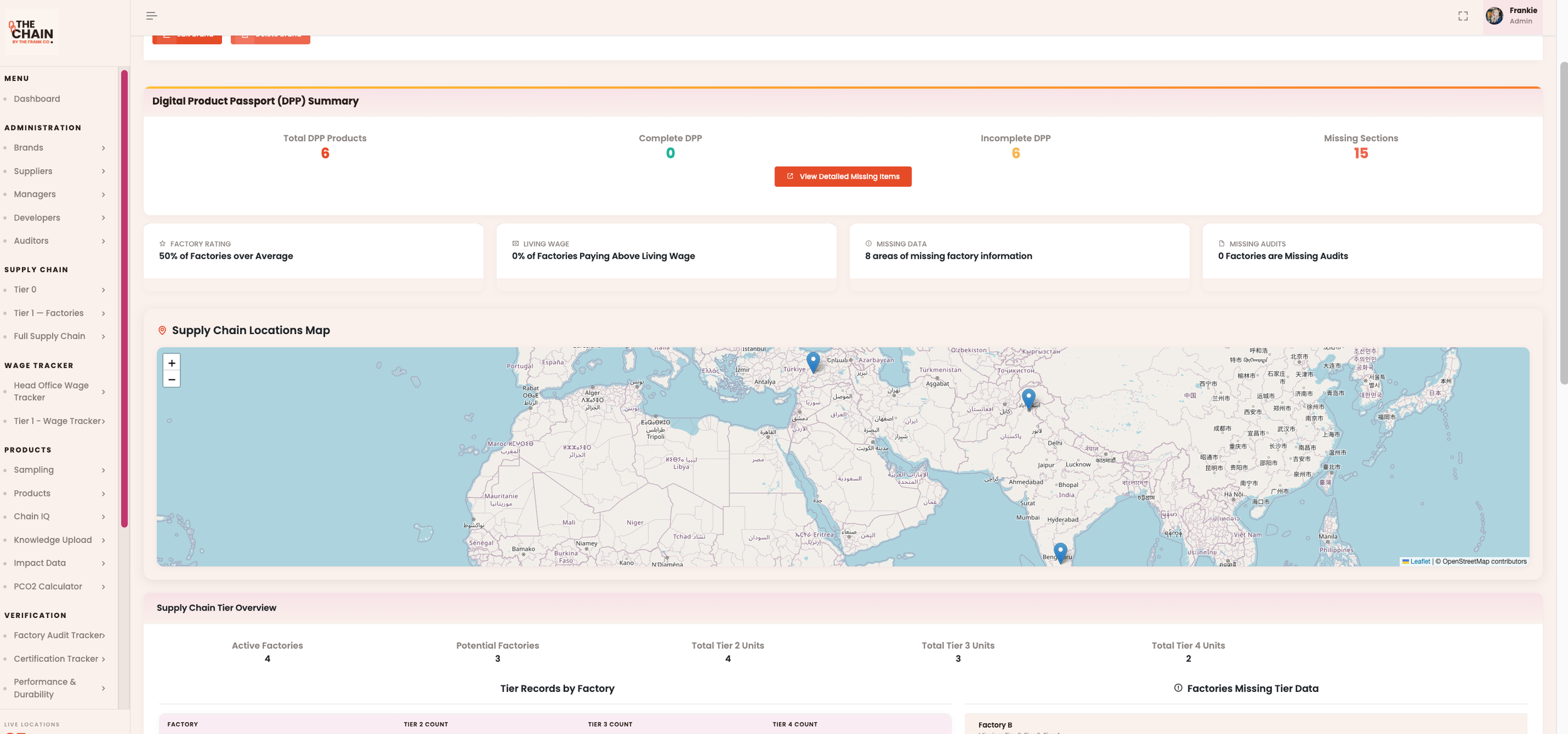
The Chain organises sustainability and compliance activities into several connected modules.
The platform currently includes:
Supply Chain
Build and manage your supplier network.
Modules include:
Tier 0
Tier 1 - Factories
Full Supply Chain
Use this section to onboard factories, map supplier relationships, and build visibility beyond Tier 1.
Wage Tracker
Measure labour performance using payroll intelligence.
Available modules include:
Head Office Wage Tracker
Tier 1 - Wage Tracker
Upload payroll information using AI to generate wage analysis, living wage benchmarks, and gender pay gap insights.
Products
Create and manage your product library.
Available modules include:
Sampling
Products
Import Product
View Products
Compliance & Labelling
Cost to Close
This module connects product information with supplier, material, compliance, and environmental data to support traceability and Digital Product Passports.
Verification
Store and manage compliance documentation.
Modules include:
Factory Audit Tracker
Certification Tracker
Performance & Durability
Product Lifecycle
Digital Product Passports (DPP)
This creates a single source of truth for factory audits, certifications, product verification, and compliance records.
Preparing Before You Begin
Before logging into The Chain, gather the information relevant to the modules you plan to complete.
You do not need to complete everything in one session. Information can be added and updated at any time.
Supply Chain
Prepare:
Factory names and addresses
Supplier contact information
Existing audit reports (if available)
Labour, health and safety, environmental, waste, and energy policies
Tier 2, Tier 3, and Tier 4 supplier information
Wage Tracker
Prepare payroll files containing:
Job role
Gender
Days worked
Gross wage
Fixed monthly allowances
The AI upload accepts common payroll formats and extracts the required information automatically.
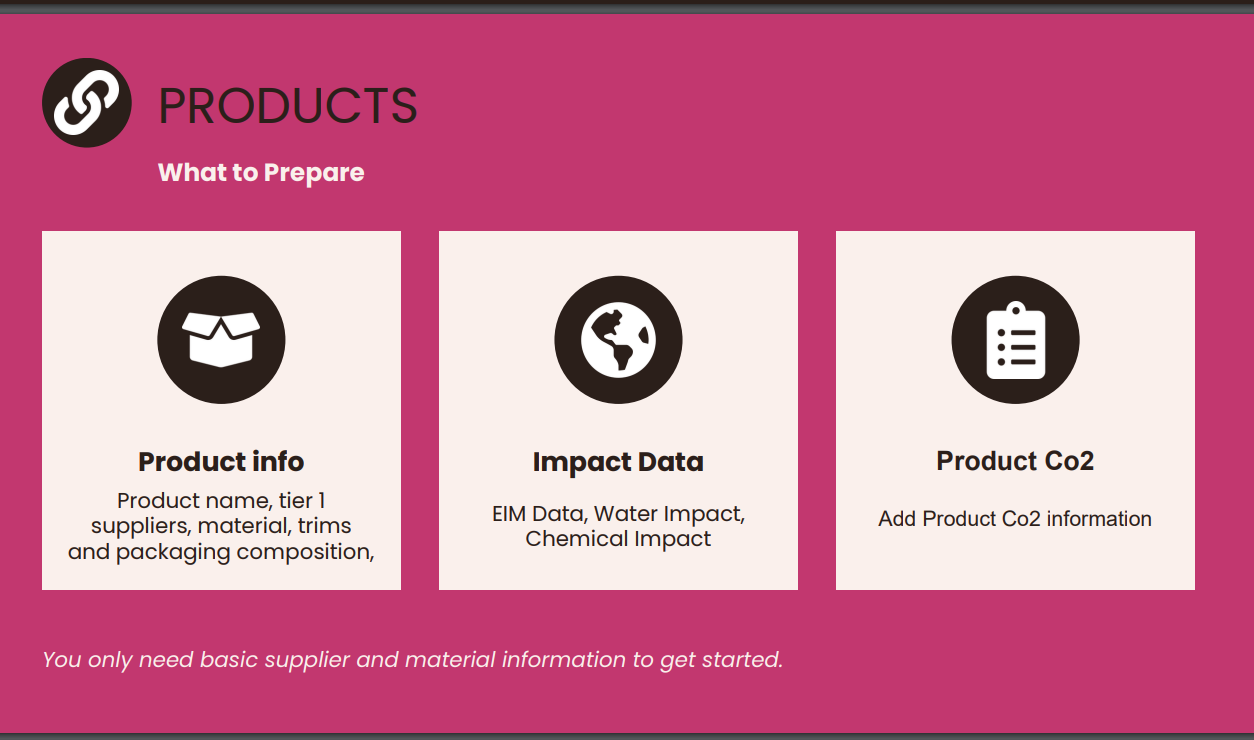
Products
Prepare:
Product names
Tier 1 supplier
Material composition
Trims
Packaging information
Environmental impact data
Product carbon data (where available)
You can begin with basic product information and enrich each record over time.
Verification
Gather any available:
Social audit reports
Environmental audits
Factory certifications
Scope certificates
Transaction certificates
Product performance documentation
These documents can be uploaded as they become available, so there is no requirement to complete every section immediately.
Accessing the Modules
After logging into The Chain, use the left-hand navigation menu to access each area of the platform.
From there you can move between:
Supply Chain to onboard suppliers and factories.
Wage Tracker to upload payroll data and analyse wages.
Products to build and manage your product catalogue.
Verification to manage audits, certifications, product lifecycle information, and Digital Product Passports.
Because every module is connected, information entered once can support multiple compliance and reporting workflows across the platform.
Why This Matters
Successful supply chain management starts with organised data.
The Chain provides a structured onboarding experience that allows brands to gradually build supplier, product, labour, and compliance information in one connected platform.
Rather than managing separate spreadsheets and disconnected systems, organisations can create a single source of truth for responsible sourcing, regulatory compliance, and sup