
Case Study: A Three-Year ESG Transformation That Delivered Measurable Results
This brand has requested to remain anonymous due to commercial confidentiality. This case study is based on a real engagement and reflects genuine data, challenges, and outcomes.
How The Frank Co. helped a leading fashion brand transform sustainability from isolated initiatives into a data-driven ESG programme with measurable business impact.
Sustainability is no longer measured by ambition alone. Today, fashion brands are expected to demonstrate progress with evidence. Investors want transparency. Consumers expect accountability. Regulators demand traceable data that supports every environmental and social claim.
For many brands, this shift presents a significant challenge. They know where they want to go, but they lack the strategy, systems, and expertise to get there.
That was the situation facing one of our clients when they partnered with The Frank Co.
Over three years, we worked alongside the brand to build an ESG programme that moved beyond compliance. Together, we improved supply chain transparency, strengthened worker rights programmes, introduced Digital Product Passports, built measurable environmental reporting, and established a governance framework designed for the future.
The result was not simply a better sustainability report. It was a stronger business.
The Challenge
When our engagement began in 2022, the brand had already made sustainability a priority. However, like many growing fashion businesses, its ESG activities had developed organically rather than strategically.
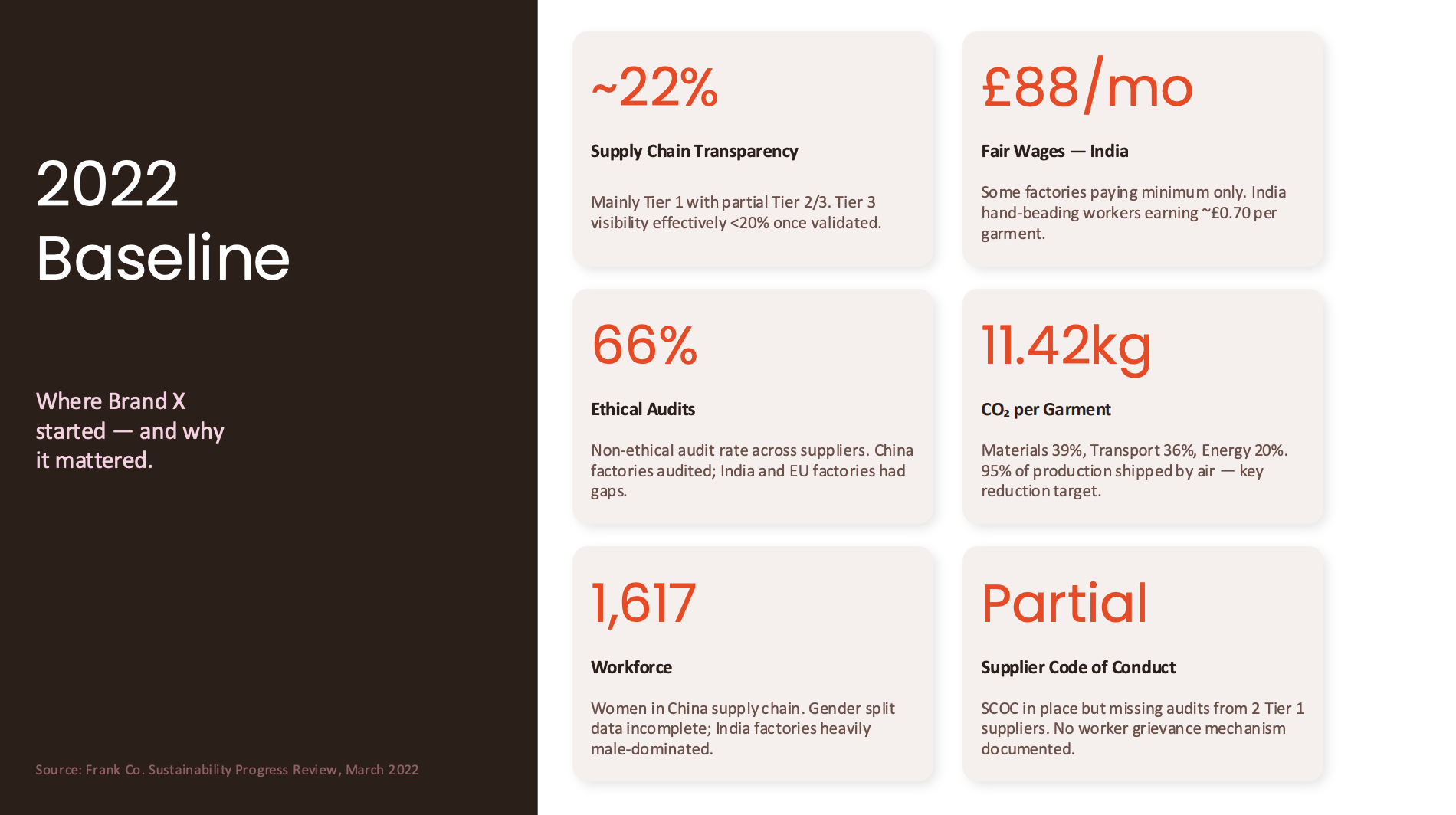
Supply chain visibility extended primarily to Tier 1 suppliers, with limited insight into deeper supplier networks. Living wage monitoring lacked consistency across factories. Environmental reporting relied on estimates rather than verified operational data, while sustainability reporting varied across different parts of the business.
Our baseline assessment highlighted several areas requiring immediate attention.
Supply chain transparency stood at approximately 22%, with meaningful visibility beyond Tier 1 remaining limited. Around one-third of suppliers had not yet completed ethical audits. Carbon reporting relied largely on Higg estimates, while 95% of production was transported by air, creating a significant emissions hotspot. Worker welfare programmes also required stronger governance, particularly around wage transparency and grievance mechanisms.
These challenges were not unique.
They reflect many of the issues fashion brands now face as regulations such as the Ecodesign for Sustainable Products Regulation (ESPR), Corporate Sustainability Reporting Directive (CSRD), Corporate Sustainability Due Diligence Directive (CSDDD), and Digital Product Passports reshape the industry.
Rather than addressing these challenges individually, the client wanted a long-term strategy capable of embedding sustainability into every part of the business.
Our Strategy
The Frank Co. designed an ESG framework built around three interconnected pillars: People, Planet, and Product.
Together, these pillars formed a structured programme consisting of 17 measurable objectives aligned with the UN Sustainable Development Goals and evolving European sustainability legislation.
Instead of producing recommendations that would sit on a shelf, every objective included practical actions, measurable milestones, and clear ownership.
Our role extended beyond consultancy.
We became an implementation partner.
Building Better Supply Chain Transparency
One of the first priorities was improving supply chain visibility.
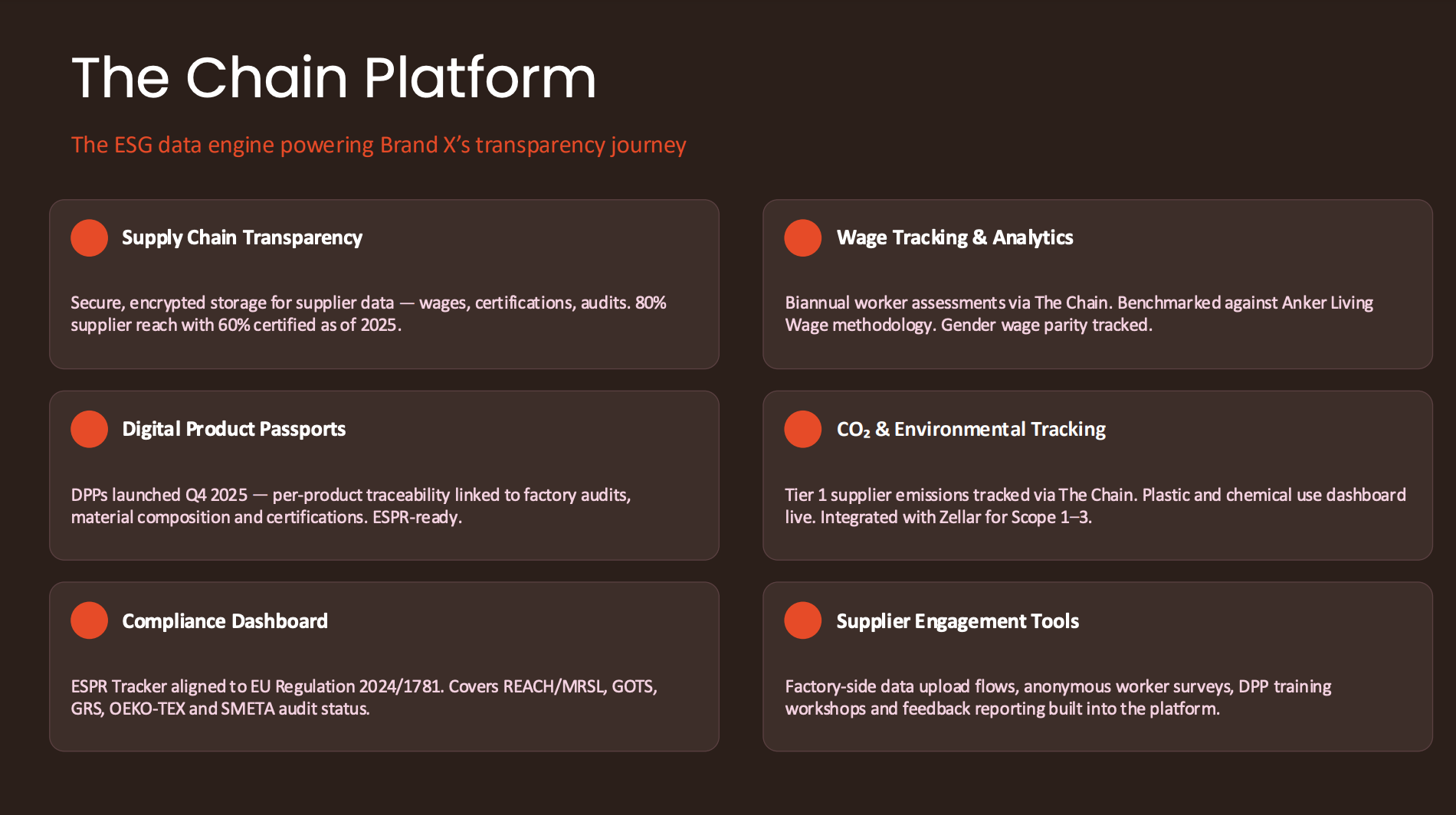
Using The Chain, our proprietary ESG and Digital Product Passport platform, we standardised supplier data collection across factories, certifications, wages, audits, and compliance documentation.
Factories were onboarded onto the platform through structured engagement programmes, while supplier data became centralised within a secure reporting environment.
By 2025, supplier reach had increased from approximately 22% to 80%, with 60% of suppliers fully certified. Digital Product Passports were successfully launched, creating verified product-level traceability that supports future ESPR requirements.
For the client, this represented far more than improved reporting.
It created confidence that sustainability claims could be supported with verifiable evidence.
Putting People at the Centre of ESG
Fashion sustainability is about more than materials and carbon.
It is also about people.
The Frank Co. introduced a comprehensive worker rights programme that combined wage transparency, living wage benchmarking, modern slavery governance, gender equality initiatives, and employee engagement.
Biannual wage assessments were introduced across every participating factory using The Chain platform and benchmarked against the internationally recognised Anker Living Wage methodology.
We also developed the client's Modern Slavery Roadmap, completed supplier risk assessments, established formal grievance procedures, and introduced gender equality monitoring through the platform.
The impact was measurable.
By 2025, every Tier 1 factory was participating in wage reporting, and average wages across the supply chain had increased by 7.9%.
These improvements strengthened both social performance and regulatory preparedness.
Turning Environmental Data into Action
Environmental reporting often fails because businesses collect too little data or collect it too late.
Our approach focused on building practical measurement systems rather than producing one-off calculations.
Working alongside the client, we developed category-specific carbon reduction roadmaps covering Scope 1, Scope 2, and Scope 3 emissions.
Supplier emissions were tracked through The Chain, while broader organisational emissions were integrated with dedicated carbon accounting tools.
We also introduced biodiversity risk mapping, plastic tracking, chemical monitoring, and circular design planning, ensuring environmental performance became part of everyday business decision-making rather than an annual reporting exercise.
Preparing for Tomorrow's Regulations
One of the greatest values The Frank Co. delivers is helping brands prepare for regulations before they become urgent.
Throughout the engagement, we supported the client's B Corp certification journey, developed Digital Product Passports, initiated certification gap analyses, and aligned reporting with emerging European legislation.
Rather than treating compliance as a separate exercise, we embedded regulatory readiness directly into the company's ESG programme.
This proactive approach reduces risk while allowing leadership teams to make informed decisions with confidence.
The Results
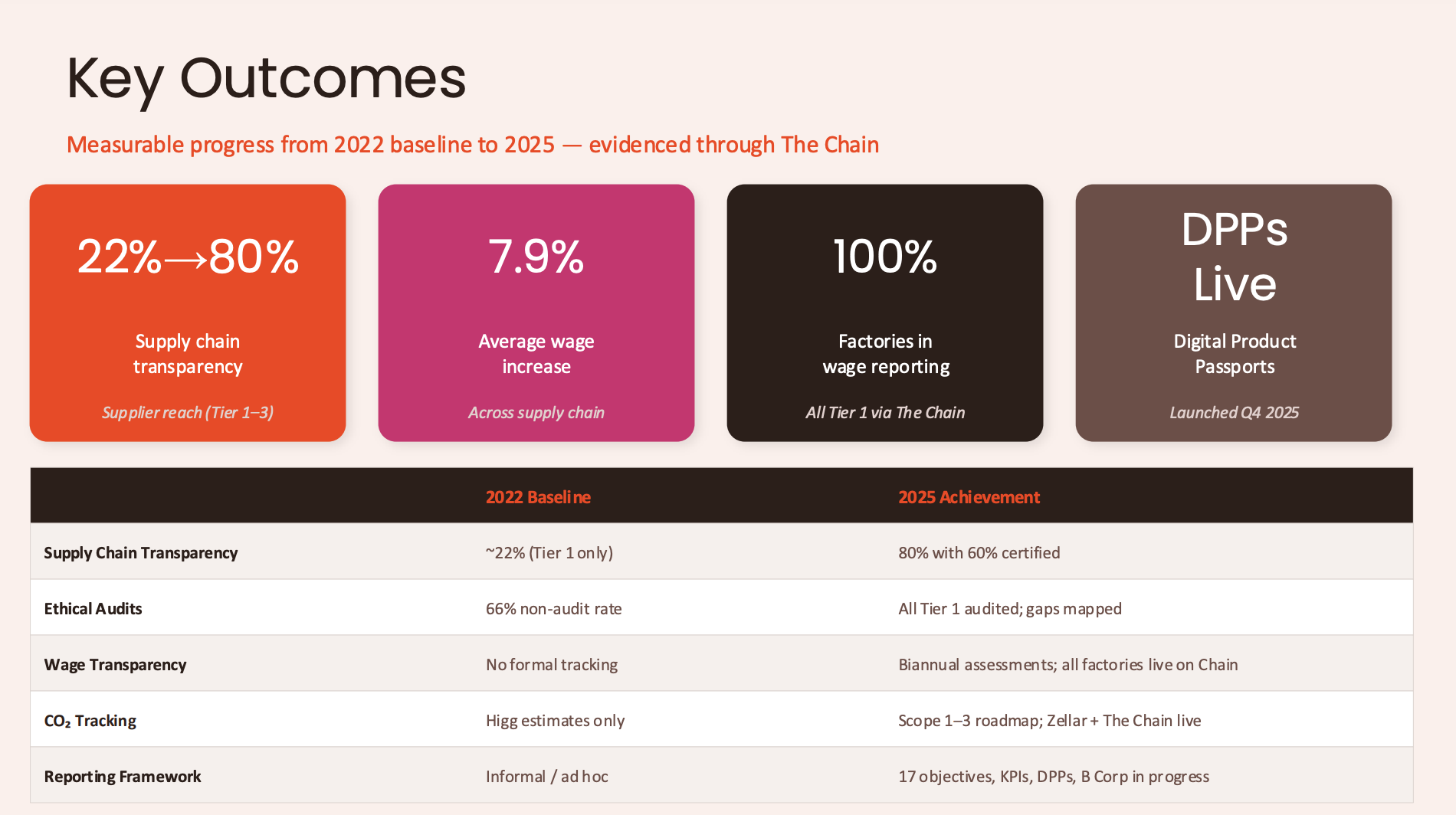
Over three years, the transformation was substantial.
Supply chain transparency increased from approximately 22% to 80%.
All Tier 1 factories now participate in structured wage reporting.
Average wages across the supply chain increased by 7.9%.
Digital Product Passports became operational.
A comprehensive ESG framework now governs sustainability activities across People, Planet, and Product.
Environmental reporting evolved from estimated carbon calculations to structured Scope 1, 2, and 3 tracking supported by supplier data.
Most importantly, sustainability moved from a collection of disconnected initiatives to an integrated business strategy backed by measurable data.
Why Businesses Work with The Frank Co.
Many consultancies deliver reports. We deliver transformation.
Our team combines regulatory expertise, ESG strategy, supply chain knowledge, Digital Product Passport implementation, and proprietary technology to help fashion brands navigate one of the biggest transitions the industry has ever faced.
We don't just explain regulations.
We build the systems, governance, processes, and data infrastructure that enable businesses to comply with them.
Whether the objective is improving worker welfare, strengthening sustainability claims, preparing for ESPR, achieving B Corp certification, or building complete supply chain transparency, our focus remains the same: delivering practical outcomes that create lasting business value.
This three-year partnership demonstrates what becomes possible when sustainability is treated not as a marketing initiative, but as a business strategy.
At The Frank Co., that's exactly what we help our clients achieve.