
Fashion brands today face growing pressure to prove where products come from, who makes them, and how suppliers operate across the entire supply chain. Consumers now expect transparency, regulators demand stronger due diligence, and retailers increasingly want verified supplier data before entering partnerships. However, despite these expectations, many brands still only have visibility into their Tier 1 suppliers.
They may know the factory producing the finished garment, yet they often lack visibility into fabric mills, dye houses, raw material processors, packaging suppliers, and subcontractors operating further down the chain. As a result, critical risks remain hidden until they escalate into operational disruptions, compliance failures, or reputational damage.
For modern fashion businesses, supply chain mapping has become far more than a sustainability exercise. It now plays a direct role in risk management, supplier accountability, ESG reporting, and long-term commercial growth. More importantly, brands that gain visibility beyond Tier 1 position themselves ahead of evolving regulations and customer expectations.
Why Tier 1 Visibility Is No Longer Enough
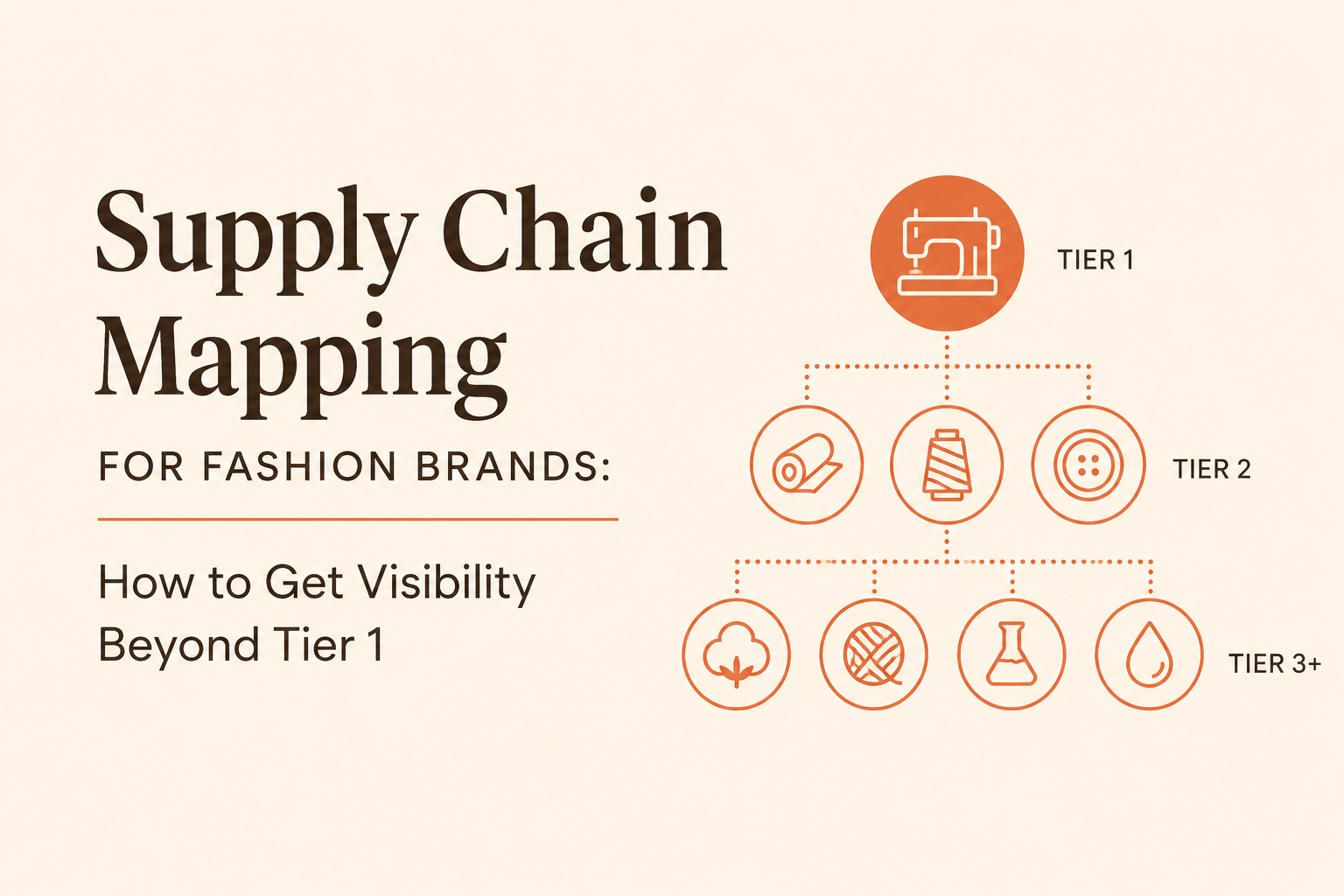
Most fashion brands begin their supplier management journey with Tier 1 factories because these suppliers handle final garment production and maintain direct communication with the brand. While this approach offers a starting point, it leaves significant gaps across the wider supply chain.
In reality, many of the highest-risk activities occur upstream. Fabric sourcing, dyeing, yarn spinning, raw material processing, and subcontracted production often happen across multiple countries and suppliers that brands rarely engage with directly. Consequently, businesses may unknowingly work with suppliers connected to labour violations, environmental non-compliance, or unverified sourcing practices.
Additionally, modern regulations continue to push brands toward deeper supply chain transparency. Frameworks such as the EU Corporate Sustainability Due Diligence Directive (CSDDD), modern slavery reporting requirements, and expanding ESG disclosure standards increasingly require companies to demonstrate meaningful supplier oversight beyond direct manufacturers.
Without proper mapping, brands struggle to answer basic but critical questions. Where did the raw materials originate? Which suppliers hold valid certifications? Which facilities subcontract work? Which suppliers present elevated risk based on geography, labour conditions, or operational practices?
When these questions remain unanswered, businesses expose themselves to unnecessary financial, legal, and reputational risk.
The Hidden Challenges of Mapping Tiers 2–4
Although many brands understand the importance of supply chain transparency, mapping beyond Tier 1 often becomes difficult in practice. Supply chains within fashion are highly fragmented, involving multiple suppliers, regions, and production stages operating simultaneously.
For example, a single garment may involve a cotton producer in one country, a yarn spinner in another, a dye house elsewhere, and a final assembly factory in a completely different region. Managing this level of complexity manually quickly becomes overwhelming.
At the same time, supplier data is often inconsistent or outdated. Many businesses still rely on spreadsheets, email chains, and disconnected documentation systems that make supplier verification difficult to maintain over time. Certifications expire unnoticed, supplier records become incomplete, and onboarding processes vary across teams.
Furthermore, some suppliers remain reluctant to disclose upstream relationships due to concerns around pricing, competition, or operational confidentiality. This creates additional blind spots that prevent brands from obtaining a complete picture of their sourcing network.
As supply chains grow larger, the lack of centralized supplier management creates operational inefficiencies that slow down audits, ESG reporting, and compliance assessments. Eventually, brands spend more time chasing supplier documents than building strategic supplier relationships.
How Effective Supply Chain Mapping Works
Strong supply chain mapping requires more than collecting supplier names in a spreadsheet. Instead, brands need a structured process that combines supplier onboarding, risk assessment, verification, and ongoing monitoring.
The process usually begins by identifying all direct suppliers and collecting standardized information such as factory locations, certifications, sourcing practices, and operational capabilities. From there, brands work deeper into the supply chain by requesting visibility into subcontractors, mills, processors, and raw material providers connected to each product category.
Once supplier data is collected, businesses must assess risk factors including geographic exposure, labour practices, environmental compliance, and certification validity. This stage helps brands prioritize supplier engagement efforts based on risk severity rather than assumptions.
However, mapping alone is not enough. Supplier data must remain continuously updated and verifiable. Certifications expire, supplier relationships change, and production networks evolve over time. Therefore, ongoing monitoring becomes essential for maintaining accurate supply chain visibility.
This is where technology plays a critical role. Instead of relying on scattered emails and manual follow-ups, brands increasingly use centralized platforms that automate supplier onboarding, document collection, verification workflows, and compliance tracking.
How The Chain Helps Fashion Brands Simplify Supplier Verification
As supply chain expectations continue to rise, many fashion brands struggle to manage supplier verification manually. The process often becomes time-consuming, inconsistent, and difficult to scale across multiple suppliers and regions.
This is where The Chain supports brands by centralizing supplier management and simplifying supply chain visibility beyond Tier 1.
Rather than relying on disconnected spreadsheets and inboxes, The Chain helps businesses streamline supplier onboarding, collect documentation in one place, track certifications, and improve supplier accountability across the wider supply network. As a result, brands gain clearer oversight into supplier relationships while reducing administrative burden on internal teams.
Additionally, automated workflows help businesses identify missing information faster, maintain more accurate supplier records, and improve readiness for ESG reporting and compliance requirements. This allows sustainability, sourcing, and compliance teams to focus less on chasing paperwork and more on strategic risk management.
Most importantly, stronger supply chain visibility helps fashion brands build trust with retailers, investors, and consumers who increasingly expect transparency backed by real data rather than broad sustainability claims.
As regulations evolve and customer expectations continue to grow, brands that invest in supply chain mapping now will place themselves in a far stronger position for the future.
If your business wants clearer supplier visibility, stronger compliance processes, and a more scalable approach to supplier verification, Frank Co and The Chain can help you simplify the process and build a more transparent supply chain from the ground up.
Want to assess your current supplier visibility and identify potential blind spots?
Send an email to info@thefrankco.com